07/10/2026
In Thessaly, Greece, a conversation about food loss quickly becomes a conversation about farming itself. What happens when extreme weather damages a crop, there are too few workers to bring in the harvest, or a farmer cannot afford the equipment needed to prevent losses? Behind food that never reaches the market are months of work, resources and income that producers cannot afford to lose.
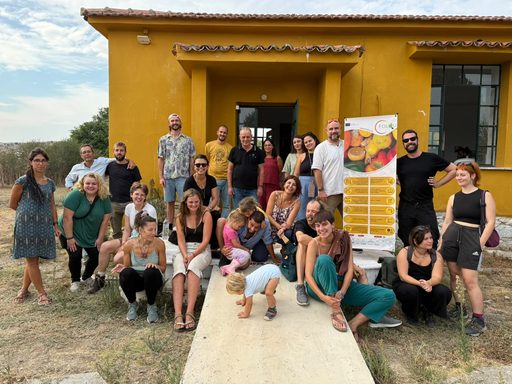
These realities shaped FOLOU’s Greek National Stakeholder Workshop on 20 September 2026 in Nessonas, near Larissa. Organised by FOLOU partner, MIO-ECSDE, in collaboration with COB Social Cooperative and in synergy with the YOU(th)CARE4Change project, the gathering brought together around 25 farmers, researchers, consumers and retailers to explore what food-loss prevention could look like on the ground.
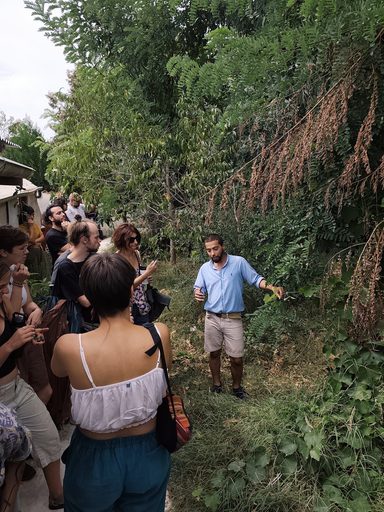
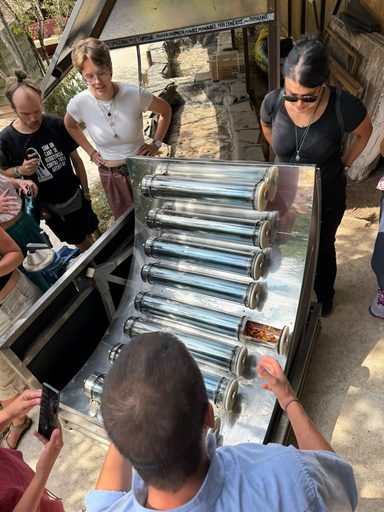
The day began on the farm. A visit hosted by COB connected the discussion to practical examples of regenerative and circular agriculture, before participants moved into an intergenerational dialogue and a session to co-create policy recommendations.
For producers in Thessaly, climate risks have a particularly immediate meaning. The workshop discussion recalled the agricultural losses caused by Storm Daniel’s devastating floods in September 2023. Alongside flooding, participants raised heat, drought and unpredictable weather as pressures that damage crops, disrupt harvest timing and increase the risk of produce remaining unharvested or becoming unmarketable.
But weather was only part of the story. Participants described difficulties in finding trained seasonal workers and the limited presence of younger people in farming. Bringing generations together offered one way forward: combining older farmers’ experience and local knowledge with younger people’s interest in innovation and regenerative practices.
Another recurring issue was cooperation. Sharing equipment, transport, storage or labour could help farmers prevent losses, yet participants acknowledged that past experiences had left some producers skeptical of formal collective schemes. Their discussion pointed towards a practical starting point: building on trusted relationships between neighbouring farmers, local associations and communities.
Affordability mattered just as much. For a small producer already managing competing demands, measuring losses or adopting a new practice can mean extra work and expense. Participants therefore called for low-investment options, shared infrastructure and accessible advice on funding and bureaucracy. They also proposed stronger links with local food networks and social organisations that could help make use of surplus produce.
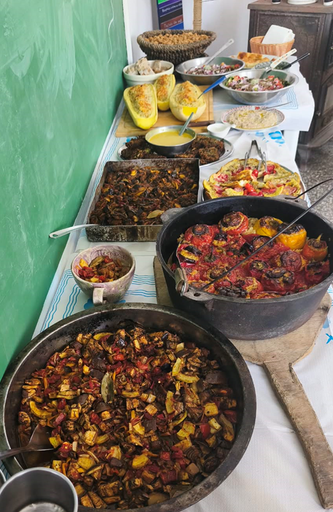
COB’s own practices gave these ideas a tangible form. Produce found different uses and outlets, from fresh foods to sweets and jams, showing how processing and diversification can help retain its value. This offered a practical example of how creativity can support prevention alongside changes in farming and cooperation.
The workshop connected FOLOU’s policy work with the everyday pressures facing Greek producers. Its message was that food-loss prevention must fit those realities: affordable measures, trusted cooperation and support that farmers can actually use. In Thessaly, protecting the harvest also means protecting the work behind it and strengthening the communities that depend on it

This project has received funding from the European Union’s Horizon Europe research and innovation program, under Grant Agreement: 101084106. Views and opinions expressed are however those of the authors only and do not necessarily reflect those of the European. Neither the European Union nor the granting authority can be held responsible for them.
FOLOU is a proud partner of the Biorefine Cluster Europe.




Copyrights © 2026 | Folou.eu Cookie & Privacy Policy Webdesign & Development by ALYS